

Children’s Dentist in Coquitlam
Request Your Child’s Dental Appointment
To request a dental appointment for your child, call (604) 942-6282 or complete the form.
We are not currently providing diagnosis or treatment for tongue-tie or lip-tie.
Children’s dental needs change as their teeth, jaws, and oral habits develop. Regular dental visits help the dentist monitor these changes, check for tooth decay and gum concerns, and help families understand appropriate preventive care.
Coast Dental Coquitlam provides dental care for children in Coquitlam, from early visits through school years and into adolescence. Care is planned according to each child’s age, oral health, stage of dental development, and individual needs.
Parents can also discuss concerns such as tooth sensitivity, cavities, dental injuries, oral hygiene, tooth eruption, or anxiety about dental appointments.
What Is Children’s Dentistry?
Children’s dentistry focuses on oral health during infancy, childhood, and adolescence. Care may include examinations, preventive services, assessment of tooth development, cavity management, and guidance for parents about brushing, flossing, diet, and oral habits.
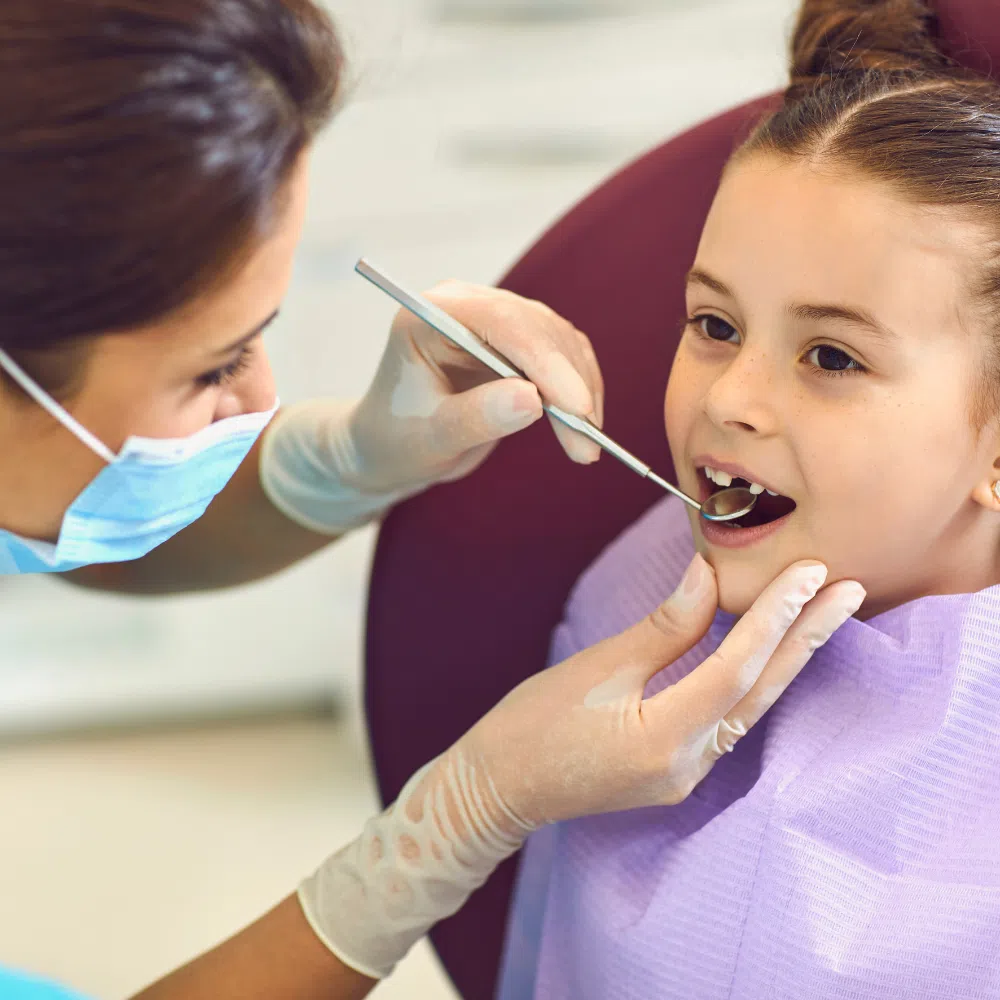
During a child’s dental examination, the dentist can assess how baby teeth are being replaced by permanent teeth and look for changes that may require closer evaluation.
When Should Your Child First Visit a Dentist?
Early dental visits help the dentist check developing teeth and gums and give parents guidance about home care, feeding habits, fluoride, and cavity prevention.
The Canadian Dental Association recommends a dental assessment within six months of the first tooth appearing or by one year of age. A first dental visit for children can also help them become familiar with the dental setting before a problem develops.

Why Are Baby Teeth Important?
Primary, or baby, teeth help children chew, speak, and maintain space for developing permanent teeth. Because baby teeth can develop decay, infection, or trauma, symptoms should not be ignored simply because the tooth will eventually fall out.
Treatment depends on the child’s age, the condition of the tooth, its stage of development, and other clinical findings.
Children’s Dental Services
Dental care for children may include:
- Dental examinations
- Professional cleanings
- Cavity assessment and preventive care
- Fluoride treatment when appropriate
- Dental sealants when recommended
- Tooth-coloured fillings when appropriate
- Assessment of developing and erupting teeth
- Dental X-rays when clinically indicated
- Evaluation of tooth pain or sensitivity
- Assessment of broken or injured teeth
- Guidance about brushing, flossing, and oral habits
The services recommended depend on the child’s age, oral health, development, and examination findings.
Dental Care as Your Child Grows
For babies and toddlers, visits may focus on tooth eruption, early childhood tooth decay, home care, and feeding or oral habits.
As children grow, examinations can monitor primary teeth, permanent tooth eruption, cavity risk, and oral hygiene. Parents can also ask about thumb-sucking or pacifier use and how these habits may affect dental development.
For teenagers, visits may include monitoring gum health, permanent teeth, cavity risk, and concerns related to sports or changes in oral care habits.

What Happens at Your Child’s First Dental Visit?
The first appointment is usually an opportunity to become familiar with the dental setting while the dentist assesses your child’s oral health.
Depending on age and needs, the visit may include:
- Reviewing dental and medical history
- Looking at the teeth and gums
- Checking tooth eruption and oral development
- Assessing for signs of decay
- Discussing brushing, diet, and preventive care
- Answering parents’ questions
Dental X-rays or other procedures are recommended only when clinically indicated.
Helping Children Who Feel Nervous About Dental Visits
Some children need time to feel comfortable in an unfamiliar dental environment. Parents can help by using calm, simple language before the appointment and avoiding descriptions that may increase anxiety.
At home, you can practise opening wide, count teeth together in a mirror, or read an age-appropriate story about visiting the dentist. Choosing a time when your child is usually rested may also help.
Preventing Cavities in Children
Cavity prevention for kids combines daily home care with appropriate professional preventive care. Parents can help by supervising brushing, limiting frequent exposure to sugary foods and drinks, and arranging dental checkups according to their child’s needs.
The dentist can assess the risk of cavities and discuss whether additional preventive measures may be helpful.
Fluoride Treatments and Dental Sealants
Exposure to fluoride can support stronger enamel and help lower the risk of cavities. Professional fluoride treatment may be recommended based on a child’s age, cavity risk, fluoride exposure, and oral health.
Dental sealants are protective coatings that may be placed on the chewing surfaces of certain back teeth to help protect grooves that can be difficult to clean.
Brushing and Flossing at Home
Begin your child’s oral hygiene routine early and start brushing their teeth as soon as the first one appears. Parents usually need to help or supervise brushing until children can clean their teeth effectively on their own.
Flossing becomes important when neighbouring teeth touch and a toothbrush cannot adequately clean between them.
Signs Your Child Should See a Dentist
Arrange a dental assessment if your child has:
- Tooth pain or persistent sensitivity
- Visible tooth damage or decay
- Gum swelling or bleeding
- Pain when chewing
- A broken or injured tooth
- A loose or damaged filling
- Concerns about tooth eruption or development
Routine examinations are also useful when no symptoms are present.
Children’s Dental Emergencies
Children can injure their teeth during play, sports, falls, or other activities. Contact a dental office promptly for severe tooth pain, facial or gum swelling, a broken tooth, significant bleeding, or another urgent dental concern.
A knocked-out permanent tooth should be handled only by the crown, not the root. Gently rinse away visible debris without scrubbing and obtain urgent dental care. Do not put a knocked-out baby tooth back into its socket.
Seek urgent medical care for significant facial trauma, uncontrolled bleeding, difficulty breathing or swallowing, or rapidly increasing facial swelling.

Book Your Child’s Dental Appointment
Whether your child is due for a dental checkup or you have concerns about tooth pain, cavities, development, or a dental injury, an examination can help determine what care may be appropriate.
Call (604) 942-6282 or complete the appointment form to request a visit.