

Custom Night Guards in Coquitlam
Request a Night Guard Evaluation
Wake up with jaw tightness, notice tooth wear, or suspect nighttime grinding? Call (604) 942-6282 or complete the form to request an evaluation.
Grinding or clenching can place repeated pressure on the teeth, restorations, and jaw muscles. Because sleep bruxism happens while you are asleep, you may notice the effects without realizing that you grind your teeth.
Coast Dental Coquitlam provides custom night guard services in Coquitlam for patients who may benefit from added protection against grinding and clenching forces. Before recommending an appliance, the dentist can examine your teeth, bite, jaw movement, and symptoms.
A night guard for teeth grinding does not necessarily stop the grinding or clenching behaviour. Its primary role is to separate the upper and lower teeth, helping reduce the effects of repeated grinding or clenching.
What Is a Custom Night Guard?
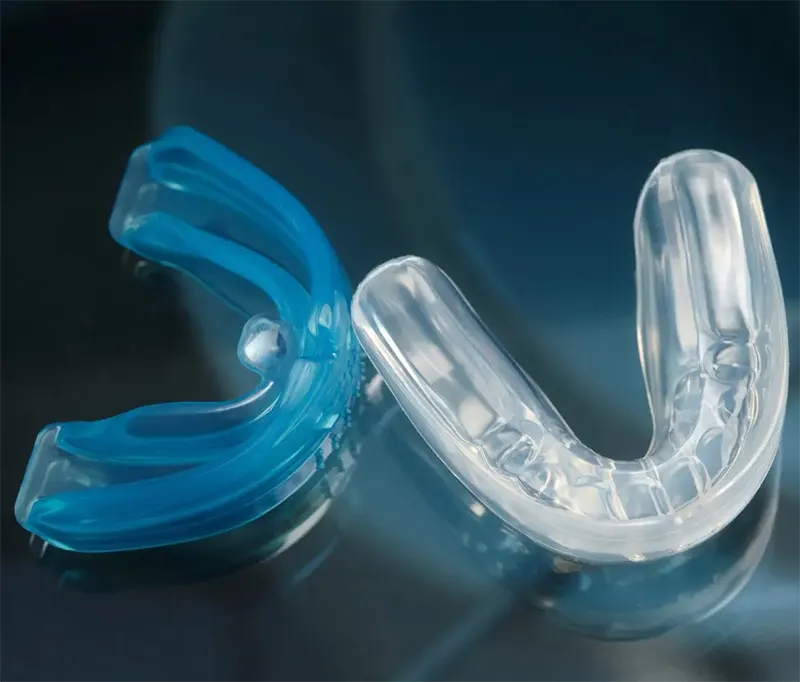
A night guard is a removable dental device that fits over the teeth and is typically worn overnight. Made to fit one dental arch, the guard helps protect the teeth from repeated contact associated with grinding and clenching.
A custom appliance can vary in material, thickness, and design. Depending on your bite, wear pattern, comfort needs, and grinding habits, the dentist may recommend a suitable type of protective guard.

Common Symptoms of Grinding or Clenching
Bruxism may occur at night during sleep or at different times throughout the day. Possible signs include:
- Flattened or worn tooth surfaces
- Chipped or cracked teeth
- Damage to fillings, crowns, or other restorations
- Tooth sensitivity
- Morning jaw tightness
- Facial or chewing-muscle soreness
- Morning headaches or temple discomfort
- Grinding sounds noticed by a sleep partner
- Pain or fatigue when chewing
- Tightness around the jaw
These symptoms can also have other causes, so a dental evaluation is important before deciding on treatment.
How Is Teeth Grinding Evaluated?
Before recommending a custom dental guard, the dentist may review your symptoms, sleep-related concerns, daytime clenching habits, medications, and oral habits.
The examination can include checking for tooth wear, cracks, damaged restorations, changes in the bite, jaw movement, and tenderness in the jaw muscles or joints.
Grinding and clenching can be influenced by several factors, including stress, sleep disruption, some medications, and lifestyle habits. If you regularly snore, wake gasping or choking, or experience excessive daytime sleepiness, medical assessment for a sleep-related breathing disorder may also be appropriate.
How Does a Night Guard Help Protect the Teeth?
A properly fitted appliance creates a barrier between the upper and lower teeth. This can help reduce direct tooth-to-tooth contact and limit wear associated with grinding and clenching.
A night guard for jaw clenching may also help some patients with muscle-related discomfort, but it should not be viewed as a universal treatment for jaw pain or temporomandibular disorders.
Jaw clicking, locking, limited opening, joint pain, or changes in the bite should be assessed before an appliance is recommended.
What Happens During a Custom Night Guard Fitting?
The process usually begins with an examination of your teeth, bite, and jaw.
- Dental assessment: The dentist checks tooth wear, restorations, bite relationships, and jaw function.
- Impression or scan: Your teeth may be captured using a dental impression or digital scanning process to help create the guard.
- Appliance design: The guard is planned according to your bite and clinical needs.
- Fabrication: The appliance is made to fit your teeth.
- Fit and bite check: The dentist checks the guard and makes adjustments if needed.
- Home instructions: You will receive guidance on how to wear, clean, and store it.
- Follow-up: The fit can be reassessed if your bite changes or the appliance becomes uncomfortable.
How Night Guards Differ from Sports Mouth Guards
Night guards and sports guards are both protective appliances, but they are designed for different purposes.
A night guard helps protect teeth from forces linked to grinding and clenching during sleep. A sports mouth guard is designed to reduce the risk of dental and soft-tissue injuries during athletic activity.
A dental night guard should not be used as a substitute for a properly designed sports guard.
Custom Night Guards vs. Store-Bought Guards
Over-the-counter guards are usually made in standard sizes or softened and shaped at home. A custom occlusal guard is made from an impression or scan of your teeth and can be evaluated and adjusted by a dentist.
Custom appliances also allow the dentist to consider your bite, existing dental work, and wear pattern when recommending the design.
Store-bought options may be suitable in some situations, but persistent grinding, tooth damage, jaw symptoms, or an uncomfortable bite should be professionally assessed.
Caring for Your Custom Night Guard
Proper care helps keep the appliance clean and allows you to notice changes in its condition.
- Rinse the guard after use.
- Clean it according to your dentist's instructions.
- Allow it to dry before storing it.
- Keep it in a ventilated protective case.
- Avoid hot water and other sources of high heat.
- Keep it away from pets.
- Bring it to routine dental visits so the fit and condition can be checked.
If you receive a crown, filling, or orthodontic treatment, ask whether the guard should be reassessed.
When Should a Night Guard Be Replaced?
There is no single replacement schedule for every patient. How quickly a guard wears depends on its material, the amount of grinding or clenching, changes to the teeth, and how it is maintained.
Schedule an assessment if the appliance:
- Develops cracks or holes
- Becomes loose or distorted
- Has rough or sharp areas
- No longer fits comfortably
- Affects your bite
- Shows significant wear
The dentist near you can determine whether adjustment or replacement is appropriate.
Frequently Asked Questions
Schedule a Custom Night Guard Evaluation in Coquitlam
If you notice tooth wear, nighttime grinding, jaw clenching, or damage to dental restorations, an examination can help determine what may be contributing to the problem and whether a protective appliance is appropriate.
Call (604) 942-6282 or complete the appointment form to request an evaluation for a custom night guard in Coquitlam.