

Dental Crowns and Bridges in Coquitlam
Request Your Dental Crown or Bridge Appointment
Have a damaged tooth, missing tooth, loose crown, or broken restoration? Call (604) 942-6282 or complete the form to request an evaluation.
Dental Crowns and Bridges in Coquitlam
A damaged or missing tooth can affect chewing, comfort, and the way your teeth function together. While a dental crown provides coverage and support for a compromised tooth, a dental bridge is designed to replace one or more absent teeth.
Coast Dental provides dental crowns in Coquitlam and evaluates patients who may benefit from dental bridges in Coquitlam. Treatment recommendations depend on the condition of your teeth and gums, the amount of remaining tooth structure, your bite, and your restorative needs.
If you have a cracked tooth, an older crown that feels loose, or a space left by a missing tooth, an examination can help determine whether a crown, bridge, or another treatment may be appropriate.

What Is a Dental Crown?
A crown fits over the remaining visible structure of a prepared tooth to provide coverage and support. It may be recommended when a tooth has lost enough structure that a filling or another conservative restoration may not provide adequate support.
A crown can rebuild a damaged tooth's shape and function while providing support for the remaining tooth structure. Crowns may also be used for certain root canal-treated teeth or placed over dental implants.
What Is a Dental Bridge?
When one or more teeth are missing, a dental bridge can provide a fixed option for restoring the resulting gap. A traditional bridge includes an artificial replacement tooth supported by crowns placed on neighbouring teeth.
Before recommending a bridge, the dentist near you considers the location of the gap, the condition of potential supporting teeth, gum health, bite pressure, and oral hygiene needs.

When Might a Dental Crown Be Recommended?
A dentist may consider a crown when a tooth has:
- A large cavity that cannot be predictably restored with a filling
- A crack or fracture
- Significant structural loss from a large or older filling
- Severe wear
- Undergone root canal treatment and needs additional protection
- A structural or shape problem requiring restoration
- An existing crown that is damaged or no longer suitable
Not every damaged tooth requires a crown. Depending on the extent and location of healthy tooth structure, alternatives may include a filling, an inlay, an onlay, dental bonding, a veneer, or another treatment.
Dental Crowns After Root Canal Treatment
Root canal treatment removes infected or inflamed tissue from inside a tooth. Depending on the tooth's location and the amount of remaining structure, a restoration may then be needed to protect the tooth during normal biting and chewing.
When root canal treatment leaves a tooth with limited remaining structure, the dentist may recommend a crown to support the tooth and reduce the risk of fracture. The dentist will evaluate the remaining tooth structure and functional demands before recommending the final restoration.
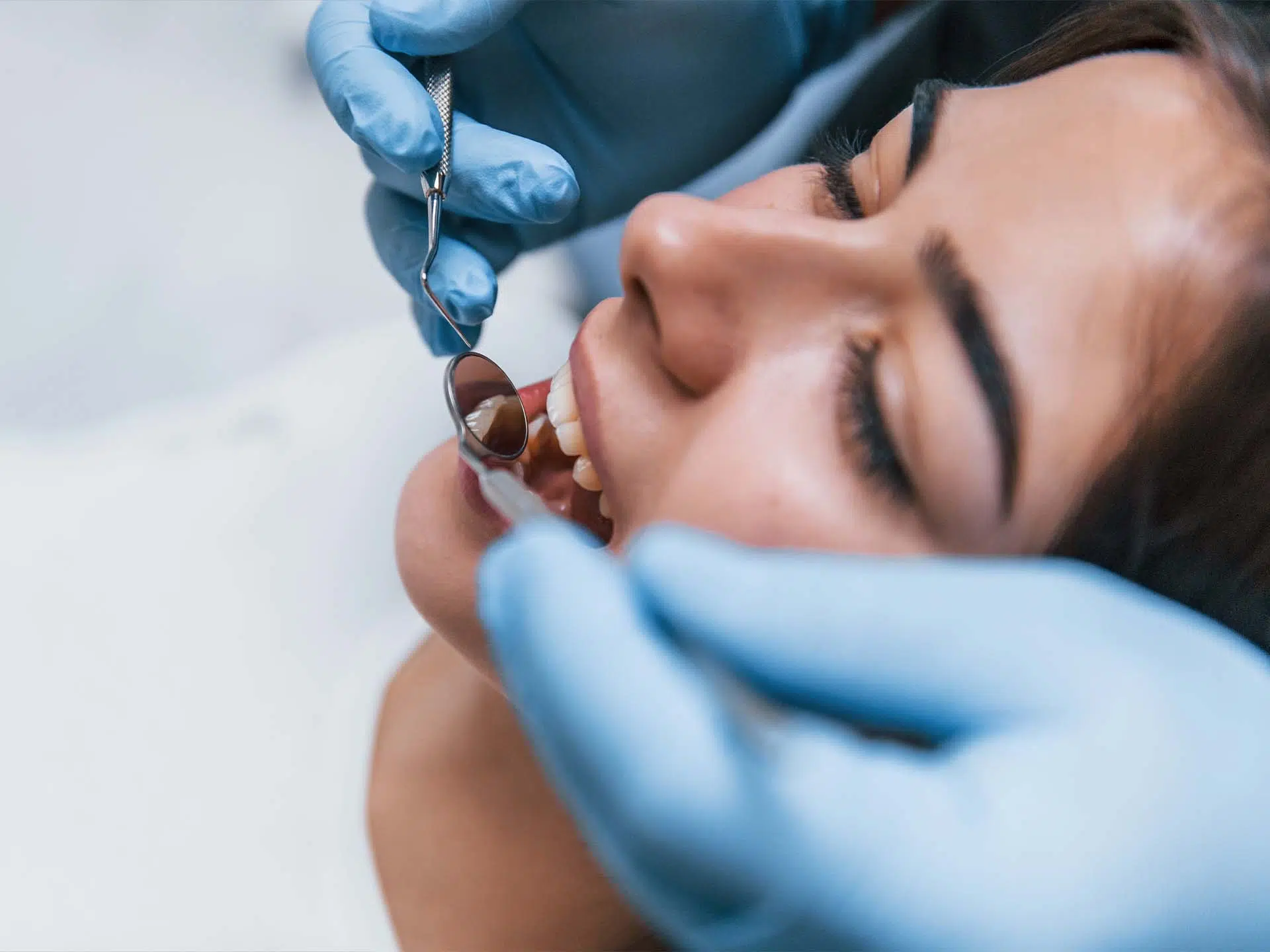

Dental Crowns vs. Fillings and Onlays
A filling replaces a localized area of decayed or damaged tooth structure. An onlay is designed to restore part of the tooth's chewing surface without covering the entire tooth, while a crown provides more complete coverage when greater structural support is needed.
The appropriate option depends on the extent of damage, tooth location, bite forces, and the amount of healthy structure that remains.
Choosing a Dental Crown Material
Porcelain crowns can be designed to resemble the colour and general appearance of surrounding teeth. Material selection may also depend on tooth location, bite pressure, remaining tooth structure, appearance, and grinding or clenching habits.
Your dentist can explain the crown materials available at the clinic and recommend an option suited to the tooth being restored.
What Happens When You Get a Dental Crown?
Before planning treatment, the dentist evaluates the tooth and the surrounding oral tissues. Decay or damaged structure is removed when necessary, and the tooth is prepared for the restoration.
A digital scan or impression records the shape of the prepared tooth and surrounding teeth. The crown is then designed to fit the treatment area and work with your bite. Before final placement, the dentist checks the fit and bite and makes adjustments when needed.
Coast Dental also uses CEREC digital technology for qualifying restorative cases. Patients interested in the chairside process can learn more about CEREC same-day crowns on the dedicated service page.
Who May Be a Candidate for a Dental Bridge?
For patients with one or more missing teeth, a bridge may provide a fixed replacement option after a dental evaluation. The dentist will evaluate:
- The number and location of missing teeth
- The health of potential supporting teeth
- Gum and periodontal condition
- Available bone support
- Bite forces
- Oral hygiene
- Ability to clean beneath the restoration
- Whether a dental implant or removable option should also be considered
Before recommending a traditional bridge, the dentist evaluates the neighbouring teeth to determine whether they can provide suitable support for the restoration.
What Happens When You Get a Dental Bridge?
Treatment begins with an evaluation of the missing-tooth space, supporting teeth, gums, and bite. For a traditional tooth-supported bridge, the neighbouring teeth are prepared to receive the crowns that support the replacement tooth.
A digital scan or impression records the area. A temporary bridge may be used when required while the final restoration is prepared. At placement, the dentist evaluates the fit and bite before securing the bridge and providing cleaning instructions.
Dental Bridge or Dental Implant?
Both treatments can replace missing teeth, but they use different forms of support. Nearby teeth serve as anchors for a traditional bridge, while an implant-supported restoration is secured to an implant positioned within the jawbone.
The appropriate choice depends on the missing-tooth space, health of nearby teeth, bone and gum condition, medical considerations, treatment preferences, and other clinical factors.
Caring for Dental Crowns and Bridges
Several factors can affect how long a crown or bridge remains functional, including the material, condition of the underlying or supporting teeth, bite forces, home care, and regular dental examinations.
To care for your restoration:
- Brush regularly with fluoride toothpaste
- Clean carefully around crown margins
- Floss between teeth each day
- Clean beneath a bridge using the method recommended by your dental team
- Use floss threaders or interdental brushes when appropriate
- Avoid chewing ice or other hard objects
- Discuss grinding or clenching with your dentist
- Wear a custom night guard if recommended
- Attend routine dental examinations and cleanings
Signs a Crown or Bridge Needs Attention
Contact the clinic if:
- A crown or bridge feels loose
- A restoration falls off
- The crown appears cracked or broken
- You develop new pain or sensitivity around the restoration
- Food repeatedly becomes trapped beneath a bridge
- The gums around the restoration become swollen or tender
- Part of a bridge becomes damaged
A dentist can examine the restoration and supporting teeth to determine whether repair, replacement, or another form of care is needed.
Schedule a Dental Crown or Bridge Consultation
If you have a cracked tooth, a damaged crown, a missing tooth, or a concern about an existing bridge, an evaluation can help determine the appropriate restorative option.
Call (604) 942-6282 or complete the appointment form to request a consultation for dental crowns or bridges in Coquitlam.