

Dentures and Implant-Supported Dentures in Coquitlam
Request a Denture Consultation
Missing several or all of your teeth, or having trouble with loose dentures? Call (604) 942-6282 or complete the appointment form to request an evaluation.
Dentures and Implant-Supported Dentures in Coquitlam
Missing teeth can affect chewing, speech, appearance, and everyday comfort. Dentures provide one way to replace several or all missing teeth, while dental implants may be used to support or retain certain denture designs.
Coast Dental provides assessment for dentures and implant-supported dentures in Coquitlam based on the number of missing teeth, remaining teeth, gum health, jawbone condition, bite, medical history, and treatment goals.
Options may include complete dentures, partial dentures, removable implant-retained dentures, or fixed implant-supported restorations when clinically appropriate and available. An examination is needed before determining which approach may suit your needs.
What Are Dentures?
Dentures are dental prostheses designed to replace multiple missing teeth or all teeth in an upper or lower arch. Depending on the design, they may rest on the gums, use the remaining teeth for support, or be connected to dental implants.
Custom dentures are planned according to the shape of the mouth, bite, remaining teeth, and replacement needs. They may require an adjustment period, and changes in the gums or jaw over time can affect fit.

Types of Dentures
Complete Dentures
A complete denture replaces the full set of teeth in either jaw and is typically taken out for regular cleaning and care.
Partial Dentures
A partial denture replaces selected missing teeth and is designed to fit alongside the remaining natural teeth. Their design depends on the number and position of the remaining teeth.
Immediate or Transitional Dentures
In selected cases, an immediate or temporary denture may be planned around the time teeth are removed. Whether this approach is suitable depends on healing needs and the overall treatment plan.
Implant-Retained Dentures
An implant-retained overdenture connects to dental implants for additional retention but can still be removed by the patient for cleaning.
Fixed Implant-Supported Teeth
Some implant-supported restorations remain attached in the mouth and are removed by a dental professional when necessary. These are different from removable implant-retained dentures.

Who May Be a Candidate for Dentures?
Traditional dentures may be considered for patients with several missing teeth, complete tooth loss, teeth that cannot be predictably restored, difficulty eating due to missing teeth, or an older denture that has become loose or worn.
Traditional removable dentures do not require implant surgery, which may make them suitable for patients who prefer a non-surgical tooth-replacement option.
Patients interested in implant-supported dentures need additional assessment. The dentist may consider gum health, available bone, medical history, smoking or vaping, oral hygiene, and the ability to maintain implant attachment areas.
Traditional vs. Implant-Supported Dentures
Traditional and implant-supported dentures address similar tooth-replacement needs but differ in their support.
Traditional dentures rest primarily on the gums and underlying tissues. They are removable and may require adjustments or relining as the shape of the mouth changes.
Implant-supported options receive additional support or retention from dental implants placed in the jawbone. Some are removable by the patient, while fixed implant restorations remain attached.
Implant treatment requires surgery and a healing period. Traditional dentures do not require implant placement and may involve a shorter treatment process.
Neither option is appropriate for everyone. The choice depends on anatomy, oral health, treatment goals, maintenance needs, and individual preferences.

What Are Implant-Supported Dentures?
Implant-supported dentures in Coquitlam may be considered when several or all teeth are missing, and additional denture support is desired.
Once dental implants are placed and ready for restoration, they can be used to support or retain a removable denture or fixed prosthesis. The number and position of implants depend on the jawbone, restoration design, bite, anatomy, and treatment plan.
Implant support may provide greater retention and stability than a conventional removable denture for some patients. However, these restorations still require daily cleaning and ongoing professional monitoring.
What If You Have Experienced Jawbone Loss?
Jawbone volume can decrease after teeth have been missing for an extended period. This process can affect the amount of bone available for implant treatment.
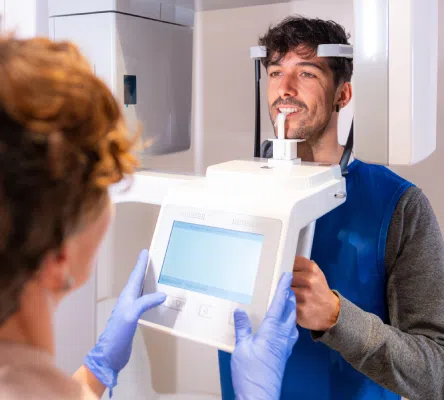
Before implant placement, dental X-rays and, when clinically indicated, CBCT dental imaging may be used to evaluate the jawbone and nearby structures.
If additional bone is needed, bone grafting may sometimes be considered before or during implant treatment. Reduced bone does not automatically rule out implant-supported dentures, but treatment options depend on individual anatomy and examination findings.
What Happens During a Denture Consultation and Fitting?
A denture consultation in Coquitlam begins with a review of your medical and dental history and an examination of the teeth, gums, bite, and supporting tissues.
Depending on the planned denture, the process may involve impressions or digital scans, bite records, tooth-shade selection, a trial fitting, and adjustments before the final prosthesis is provided.
Follow-up visits help the dental team check comfort, bite, retention, sore areas, and function.
For implant-supported treatment, additional stages may include diagnostic imaging, implant placement, healing, selection of attachment components, and fitting of the final restoration.
Denture Adjustments, Relines, and Repairs
The gums and underlying bone can change over time, which may alter how a denture fits.
Have your denture assessed if it becomes loose, causes recurring sore areas, shifts while eating, or becomes difficult to use comfortably.
Depending on its condition, the dental team can discuss whether adjustment, denture relining, rebasing, repair, or replacement is appropriate.
Caring for Dentures and Dental Implants
Traditional removable dentures should be cleaned regularly according to the instructions provided by the dental team. They are usually removed for cleaning, and you may be advised to remove them overnight.
Removable implant overdentures require cleaning of both the prosthesis and the implant attachment areas.
Fixed implant-supported restorations remain in the mouth but still need careful cleaning underneath and around the implants. Interdental brushes, specialized floss, or a water flosser may be recommended depending on the restoration.
Regular dental visits help the team monitor the gums, denture fit, implant attachments, bite, and supporting tissues.
Denture Care in Coquitlam
Our clinic is located at 3030 Lincoln Avenue in Coquitlam, near Coquitlam Centre. Patients with missing teeth, loose dentures, or concerns about an existing prosthesis can schedule an examination to discuss available replacement or adjustment options.
Request a Denture Consultation in Coquitlam
If you are missing several or all of your teeth, have an existing denture that feels loose, or want to discuss implant-supported options, an examination can help determine which approach may be appropriate.
Call (604) 942-6282 or complete the appointment form to request a denture consultation in Coquitlam.